


Paul Belasik, as usual, has his own original take on the controversial issue of nosebands…
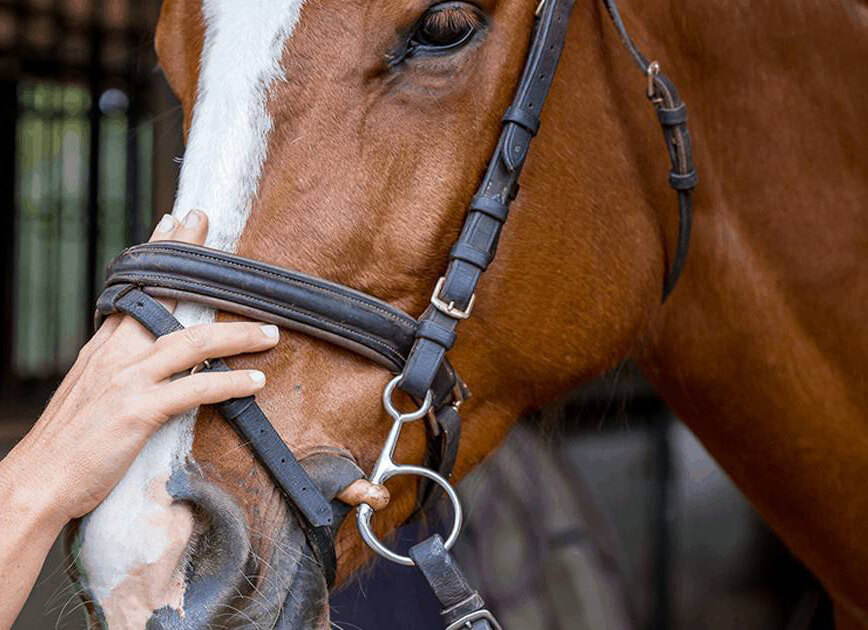
Every time I go to a horse show, I feel sorry for the technical delegates and ring stewards. They have to be the faces who enforce the constantly changing, often contradictory, rules issued by opaque committees which often seem like emotional reactions rather than guidelines to various riding problems. The due diligence that should inform these rules is often shaky. Furthermore, there never seems to be any follow-up summaries with evidence that a rule had any effect on its intended objective, either positive or negative. I want to go over a relatively new rule about loosening horses’ nose bands. The powers that be invented a magical widget: a plastic device that must be able to fit between the horse’s noseband and its nose, ensuring that all horses must be ridden with a loose noseband, under penalty of elimination.
Two things came to my mind immediately. One is that if this rule is not changed in two or three years, you will see a dramatic increase in tongue and mouth problems. The second is, how many people on this very committee, either wear, or know someone who wears, a mouthguard prescribed by their dentist? These mouth guards are highly effective. They are often called stabilizer splints. Some are soft and some are rigid, and they relax jaw muscles by keeping the jaw still. They can reduce headaches, treat TMJ disorders, jaw soreness, and protect against tooth wear from severe grinding. They often place the jaw in a more natural and comfortable position. How could this science not have been at least a thought in part for the new noseband rule? How could this not have come up in due diligence concerning the originally proposed rule, and whether this kind of science might have anything to do with horses and contact?
There have been some studies on the possible negative effects from tight nosebands, but it’s hard to tell who commissioned the studies. They are admittedly inconclusive, and even freely state that the magical widget is based on the wive’s tale of the two finger space between the noseband and the horse’s nose, of which none of these studies could find the origin. No one, as far as I have been able to determine, has done any studies on the positive effects of firmer nose bands, and like human stabilizing splints, their relationships to open mouths, tongue problems, or TMJ issues. One of the studies in fact, did find that loose nosebands could contribute to more friction of the bit in the horse’s mouth.
I have been breaking horses for 50 years. I feel my input is more than anecdotal, because in all the time I’ve use the same system. Bridles with cavesson and flash, snaffle bits placed in the correct position in the horse’s mouth, with a padded lunging cavesson on top so that the first initial contact is not to the bit at all, but to the rings of the lunging cavesson.
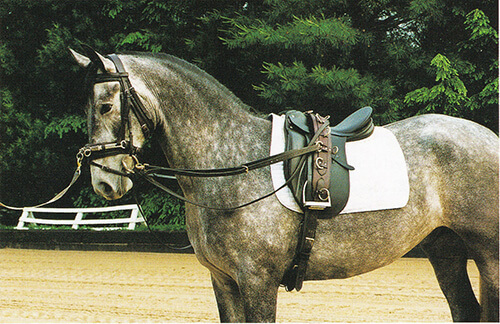
A young horse in full lunging equipment. Photo Credit: Karl Leck
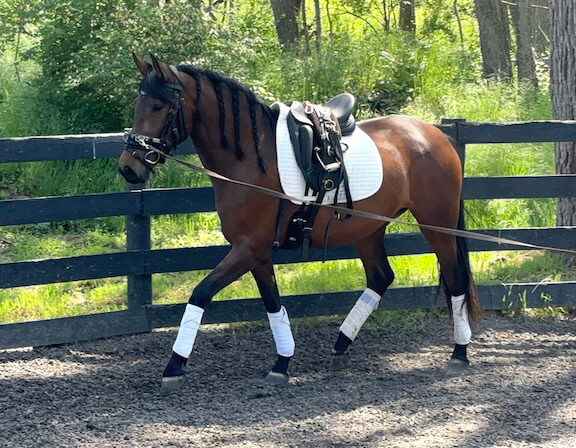
A three-year-old in the first few days with lunging equipment. The horse is getting accustomed to a properly fitted bit with no pressure, guided only by the padded lunging cavesson. Photo Credit: Rose Caslar Belasik
Most horses learn to accept a bit through a careful lunging program with side reins, which eliminates the unsteadiness of the riders’ hands and the weight of the rider, allowing horses immediate feedback if they fall in into bad posture of the head and neck. Then the bit becomes less of an object of force, but more of a propriocentric device to signal rebalancing just as you are I would only need to touch a chair as we walk in the dark room to realign our balance. We don’t lean or hold ourselves up on the chair, neither do we intend for a horse to lean on the side reins. The ultimate intention is to teach the horse to redistribute its balance more towards the rear.
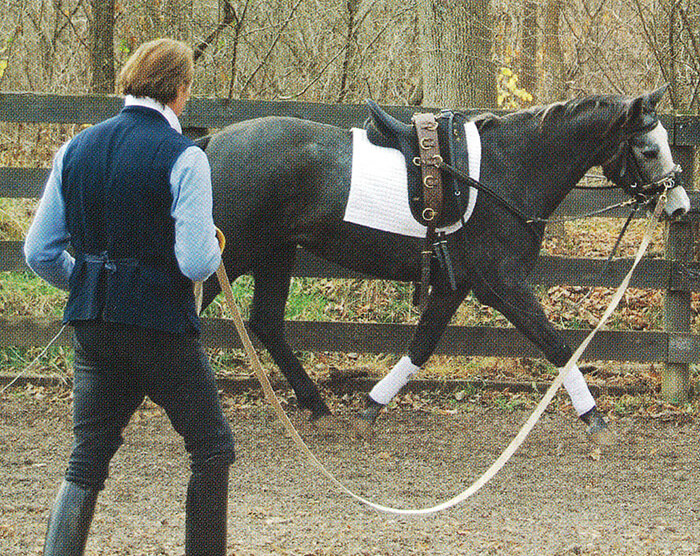
A three-year-old two weeks into training. The side reins are now attached, and the process of contact begins.
Photo Credit: PA Riding Academy
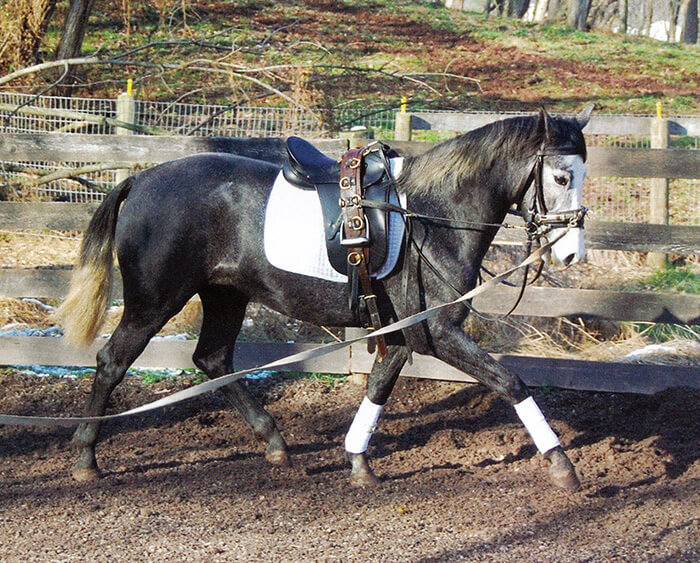
A three-year-old six weeks into training. The side reins are beginning to shape the neck. Here is where it is very important that the noseband keeps the mouth quiet, especially if the horse is more oral. The horse learns to accept the contact with a closed mouth. If the noseband is too loose, it can encourage the horse to open the jaw instead of flex at the poll or to start pushing the bit with the tongue muscles which can lead to very difficult problems. Photo Credit: PA Riding Academy
There has always been a small percentage of horses who are more oral and might grind their teeth or try to push the bit around too much with their tongues. In these cases, it was important to tighten the nose bands to quiet down the jaw, not tourniquet tight, but firm enough to stabilize and actually let the jaw relax. Over time, the horse became accustomed to accepting the properly fitted bit. There were no tongue problems and teeth grinding would stop, sometimes within months, sometimes a little longer. Importantly the horses were not showing signs of stress. As a sidenote, I’m not sure that the grinding didn’t have something to do with the normal teething schedules of young horses, as all these horses were three and four years old. But in any case, they went on to have normal contact with the bit.
I must say in capital letters that abusive hand-riding can nullify the best preparation. In hindsight, I’m sure what I was doing was using noseband adjustments like modern stabilizing splints to quiet the destructive over-action of the mouth, jaw, and tongue. In many horses, a firm well-padded noseband with a quality flash attachment is not cruel any more than a night guard is cruel for humans. In fact, they could be beneficial.
This is where I feel the rule makers need to be careful not to make rules that are emotional reactions or reflexive defensive mechanisms to unreasonable political pressures, not based on good evidence. This is what I meant by careful due diligence and good research. Adapting hastily invented rules, that have to be changed, not only adds to confusion, but contributes to a lack of confidence in the rule makers. Riders may wonder how many rules are just results of arbitrary biases or faulty education.
In reality there is not some magical length of whip – that after a certain number of centimeters it turns into an object of abuse. Or that there is a magical adjustment of nosebands which eliminates abusive hands. I find that for the overwhelming part, most trainers are not trying to abuse horses. They love their horses and riding, and they try to solve problems, not create them. We need to focus less on equipment and more on the causes of abuse: lack of education and improper incentives that excuse bad riding, even reward it.
The next time you’re at a horse show and you see someone riding well, if they catch your eye for harmony or politeness, say something to that rider. Don’t wait for the judge’s affirmation, or a judge’s denial. Riders will respond to this praise. It will go a long way to encourage riders that what the judges think is not the only thing that matters. I think people have a lot more power than they know when determining the direction of dressage.
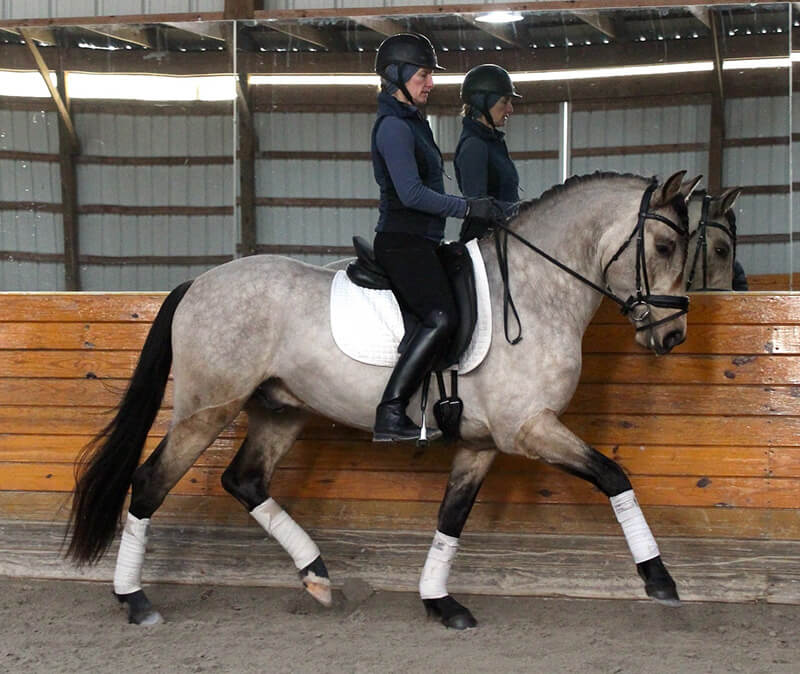
This is the result of the classical lunging program used to introduce contact. Here is a horse a few months under saddle, after undergoing his initial start in our lunging program. He is being ridden in a form he is familiar with and accepting comfortably. Photo Credit: Paul Belasik
OMG ….I strongly believe that everything happens for a reason. I first became aware of you Mr Belasik with your Dressage for the 21st Century. I earned my BHSI back in 1973 at the Yorchshire Riding Centre under NIcle Baetle and her daughter Jane and Christopher. On my own years later acquired several young horses while living in St Croix VI. Your book was my Bible to bringing them along into riding horses for my Riding School. During that time I was able to go to Portugal and was introduced to the Lusitano and feel in love with the classical study of the manage. Many of my students just wanted to learn more or just brush-up skills to go on riding holidays in Europe or the US. 911 changed everything and I had to move back to the US. I finally purchased my first Lusitano and the dream became real to ride a dancing horse. I now have an Andalusian that I’ve brought along since he was a yearling. I just finished your article. I am now re- addressing Salidar’s exceptance to the bit with the patience of work on the lung. Just days ago I finally met Britton Rogan. I will be an auditor at Eqimar June 20th and on the waitlist to ride with you.