


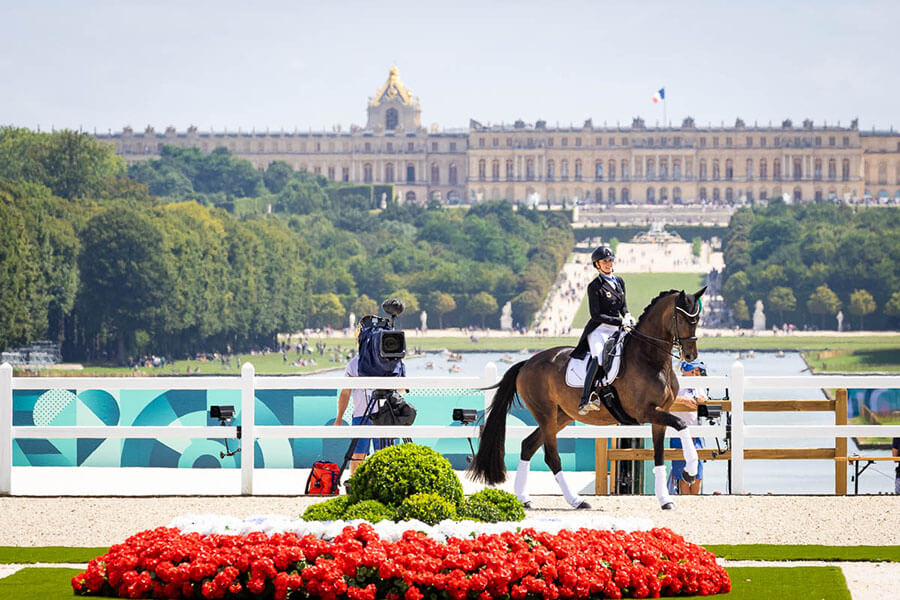
Rebecca Ashton finds that there’s more to being the world’s number one dressage rider…
The Olympic Games is hard work. The work ethic required, the anticipation waiting to see if you’ve made it to the world’s biggest sporting stage, the long hours, the mental toughness required, the focus. And that’s just the journalists! For the athlete it’s a real test of the human spirit and physical prowess…which is what it has always meant to be. And for equestrians, there are two athletes to consider, one of them completely reliant on the other. So is it all smooth sailing to get to the top of the podium?
When you see some of the riders’ socials or see them at competitions battling it out with big smiles, you’d be forgiven thinking that it might be just that easy. Some people are just born to do it. Some were made for it. And then you think, I want that athlete’s life because, hey, what’s not to love about it? What we usually don’t get is the full story; the heartache that can go hand in hand with achieving such Everest sized goals.
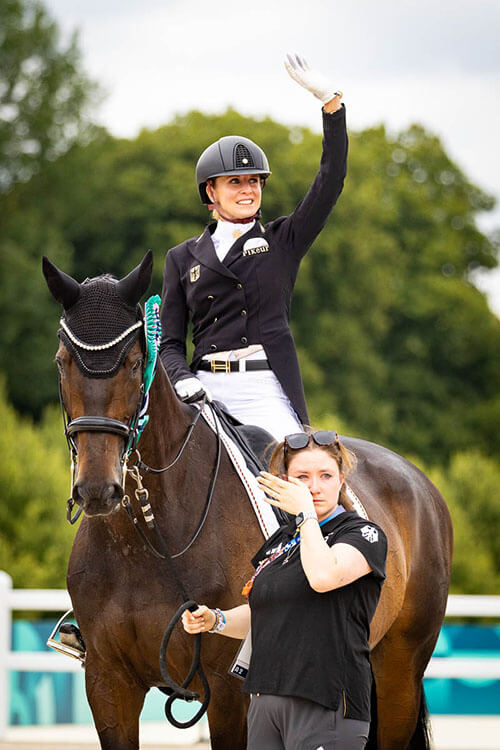
One such athlete is Olympic gold medalist, German dressage star Jessica von Bredow-Werndl. Jessi is blonde, pretty, articulate, lives on a gorgeous property, has the best horses in the world to ride, a beautiful family and is uber successful. She has won team and Olympic gold at the last two Olympics. She’s “The Golden Girl” personified. Her life is perfect. Don’t believe me? Check out her Instagram account.
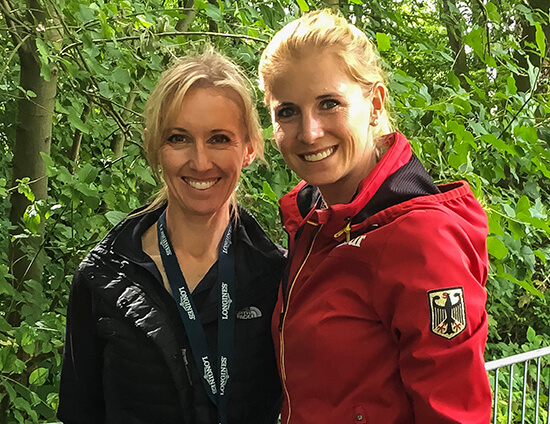
So it was a treat to sit down and chat with the Olympic gold medalist and what we had was a down to earth, honest discussion of the toll the Olympics can have on the best prepared and defending champion.
The first thing Jessi says about Paris? “It was super exhausting. The pictures were amazing, the final last day when I was able to see Paris, I really liked it, I enjoyed it and I realised how much of the city was part of the Olympics. But during the Games while I was competing, I was just in my bubble going from the hotel to my training and back to the hotel. Looking back on it now it was amazing that I could do it again. But it was so much more difficult compared to Tokyo. The pressure was incredible, also because I hadn’t been beaten for three years. Then I was beaten in Paris (Cathrine Laudrup-Dufour on Freestyle beat Jessica and Dalera in the Special), the first time and all of a sudden I was not the one in the favourite position.
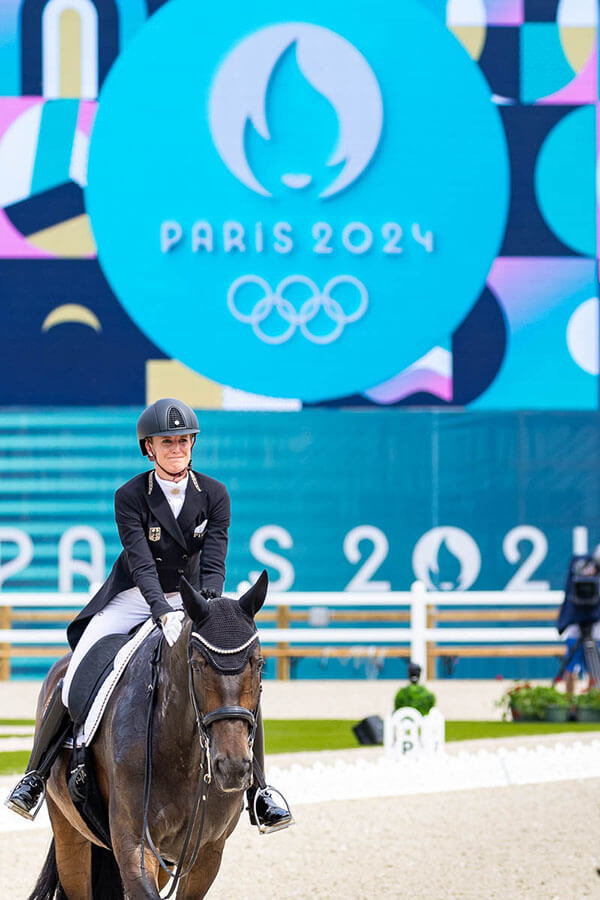
“These 23 hours between the team and individual competition were super exhausting on a mental level.”
How did she deal with it? “I have many tools. That was the toughest mental test of my life. I don’t think anything could be harder on a sporting level.
“I do many things, rituals to be in the here and now because there is no fear in the here and now. It is just a projection of the future. But to get there, it takes a lot of strategies not to be too scared of probable outcomes. Breathing techniques, EFT, many things so I could focus on what was happening now. I had to be nice to myself. However it ends it doesn’t change the value of myself.”
It was a relief for Jessi and the Germans to get the team gold but it also increased the pressure on her for the individual medal. “After I was beaten in the Special, they didn’t really expect me to win then the next day. There was a new winner and you could really feel it in the scores.”
On the day of the individual test, Jessi relives, “I didn’t want to be in Paris that day. I wanted to be anywhere else. I told my husband I won’t do it again. I often ask myself, why do I do it?” So why does she keep gong back for more? “I don’t know. But I want it. I’m not addicted. I like to challenge myself but in a very healthy way. I love what I do. I love to see how much can I motivate and manage my horses in a positive way, to see how I can bring their full potential to the surface. Because it’s in my horses. So looking back to Paris, it looked amazing, it was amazing but in the moment for me it was completely exhausting. Where the win in Tokyo was exciting and overwhelming, Paris was a relief. It was tough.”
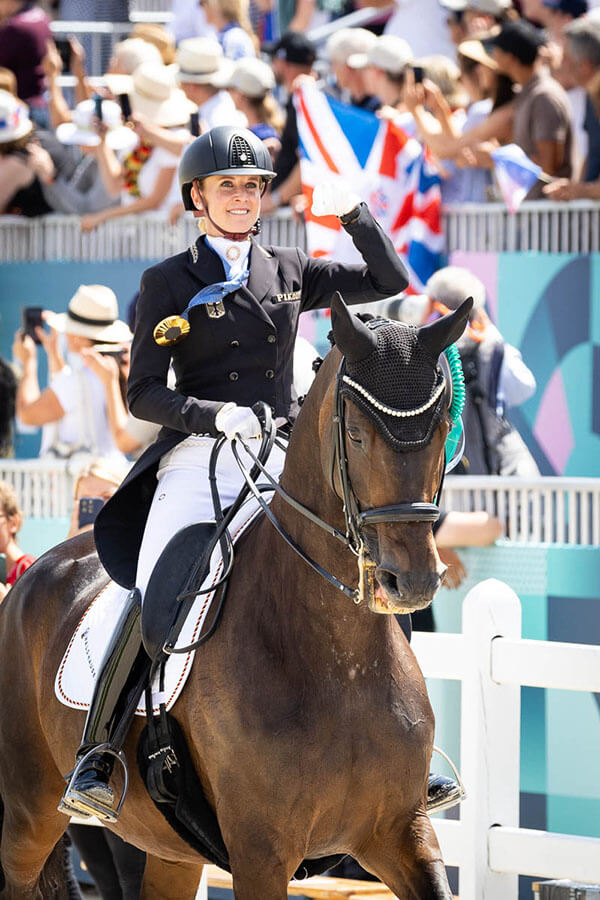
While the two Olympics felt very different for the German star during the event, they also affected her very differently afterwards. She explains, “To be honest though, I was more exhausted after Tokyo. After Paris I managed myself with more awareness. After Tokyo I was so empty. Immediately after winning it was like being high (I imagine!) but the low afterwards was very low. I couldn’t feel joy, I couldn’t feel sadness, I couldn’t feel anything for a couple of weeks and it took me about six months to get inspired again.
“Luckily there were the Europeans in between so I had to kick my arse to get back into my routines, but it was tough. It’s a life long childhood dream that came true, but what then? Everyone had talked about post Olympic depression, but I wouldn’t say I was depressed, but I could imagine how it would feel to be depressed because I felt so empty, so useless.
“I was also pregnant immediately after the Olympics and then I lost the baby just after the Europeans. That came on top of everything so it was all quite difficult for me.”
Sometimes Jessi still doesn’t really believe that she won the Olympics again. “I look at the medals and wonder if it was me who won them because you think you will be and feel different, but you don’t. It does’t change the most important things in your life.
“And it’s the same thing if things don’t work out. The most important things won’t change. It helped make me mentally strong. Paris is over now. No one is talking about it. Everyone is now talking about LA. Me too!”
How did she get out of the rut after Tokyo? “I had no plan after Tokyo because I had never had this feeling before. It took time. I remember it was February when I felt inspiration again. I didn’t feel this after Pairs though. That’s crazy. I didn’t have the mental breakdown. I was prepared for it. I planned some days off and I took care of myself. Being aware of what could happen sometimes helps to prevent it.”
Jessi is quick to highlight that everyone struggles with different things but now she is getting better at getting out of the struggle. “I know when to kick my arse and when to hug myself. This is what I learnt between Tokyo and Paris. This is what I needed for Paris. I needed to hug myself before the Individual test. It doesn’t change my self worth. I can’t give anything more than my best.”
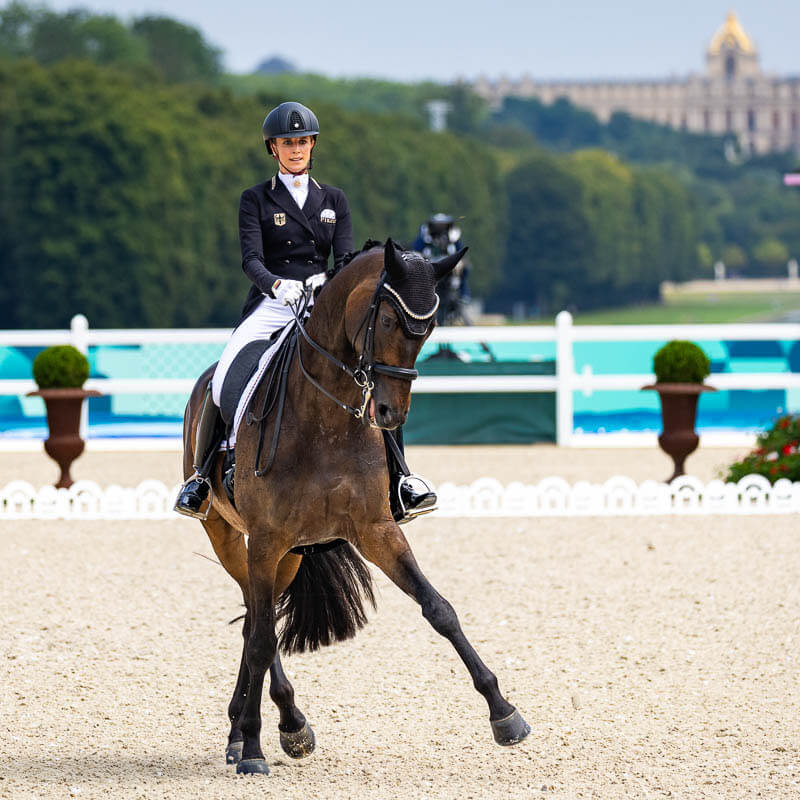
So next time you see an athlete with a big smile and a shining gold medal around their neck, know that they are real people with real problems. But what allows them to swim instead of sink? They find a solution, they make a plan and they believe in themselves.