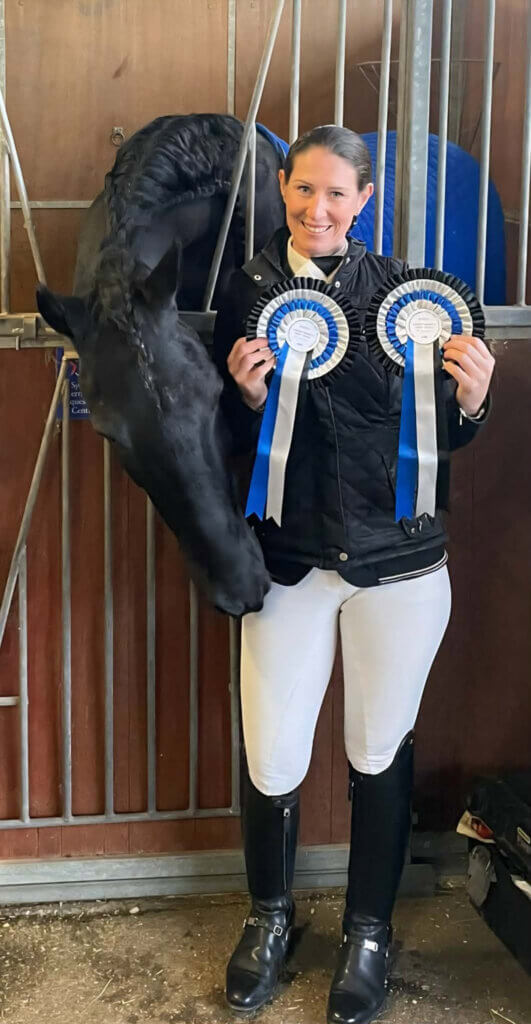



Movement practitioner, mindfulness teacher and dressage coach, Rebecca Ashton
has a set of exercises to help you focus before your test
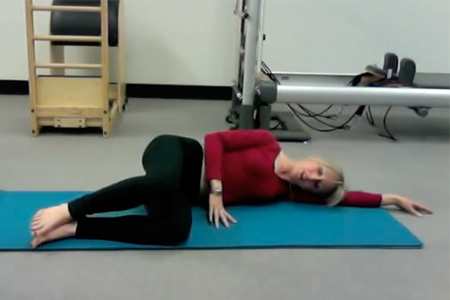
You love competing. You love having goals, overcoming challenges, spending time with your wonderful horse and showing him off to the world. But oh those game day nerves! You forget to breathe, you can’t think straight and you feel like you let yourself and your horse down. Sometimes even consciously you feel ok, but unconsciously your body and your brain have other ideas.

Not every rider can copy Jessica von bredow Werndl, but you get the idea
The top riders will tell you that they always feel nervous but they harness that and make it work in their favour. So how?
Here are some techniques that might help things go more smoothly on comp day. They are good to get you in the zone so to speak, to get you focused and relaxed without actually telling yourself to be focused and relaxed (which often just makes things worse). They are a mix of mental and physical approaches that are tried and tested. It’s like a pick and mix for you to play with and see what works.
Let’s try them with a rider and see what is helpful
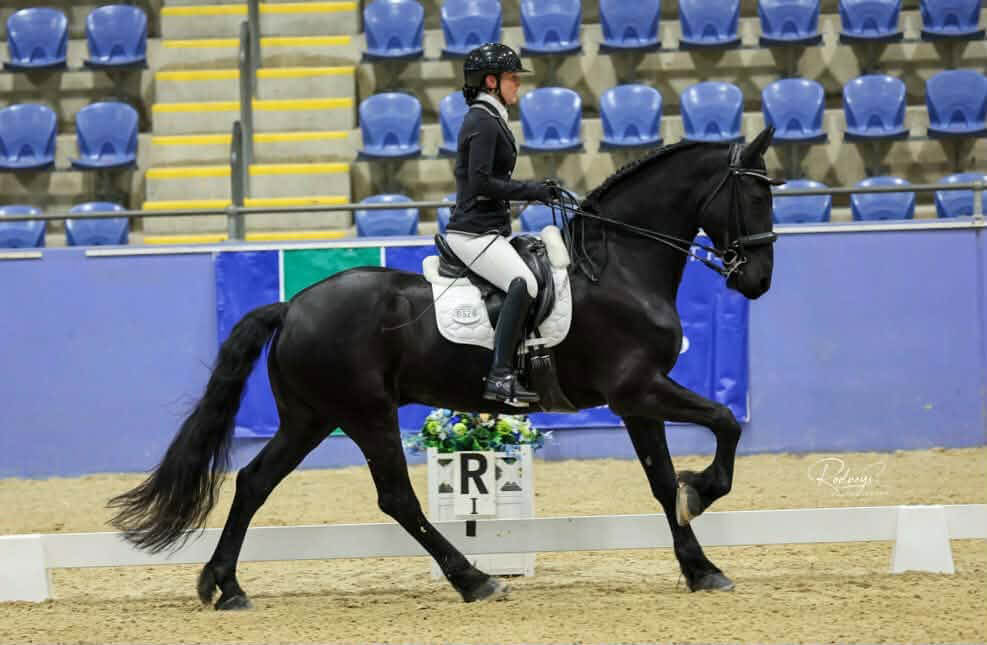
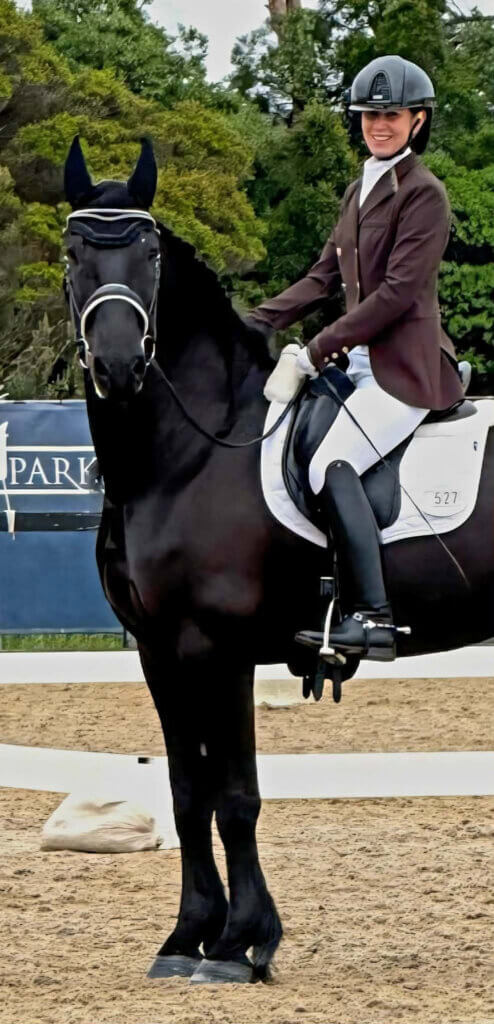
Para rider, Heidi Ford and her Friesian gelding, Rikaardt H competing at FEI Grade 5 Grand Prix. level
I garnered the help of of successful para dressage rider and top person to boot Heidi Ford to put them through their paces and tell us her own ideas and techniques for competition day jitters.
Heidi, mother of two, bought Rikaardt H as he was just rising 3, she backed him herself and has produced him entirely to FEI Grade 5 Grand Prix.
In 2018, however, Heidi became seriously ill. She contracted a rare form of cancer in which her abdominal wall muscles were amputated (she has no core now) a year later breast cancer, and bilateral mastectomy, and 17 rounds of Chemotherapy. Which also caused significant neuropathy. “Between all the pain, grief and sickness, Rik was always my bright spot. He did his best for me and that’s how he helped me through a difficult period in my life. I have never met a breed more focussed on their person when they choose you, so very special .”
Heidi had to learn to walk AND ride a horse all over again after her illness, as she was determined to get back in the saddle with Rikaardt. ‘We had to learn to communicate with each other all over again, it was a long road, and it was so very hard, but Rik made it a great joy for me to ride dressage again.’ And so they began competing together. ‘Rik was unsure and scared in the beginning, but he trusts me completely and gives me his best every single time, looks after me like no other’
Had I not had the kind of relationship I have with Rik, I’d never have recovered as well well as I did, with a resilience and strength which only comes from having absolute trust, friendship and support from a being whom chooses to choose you.
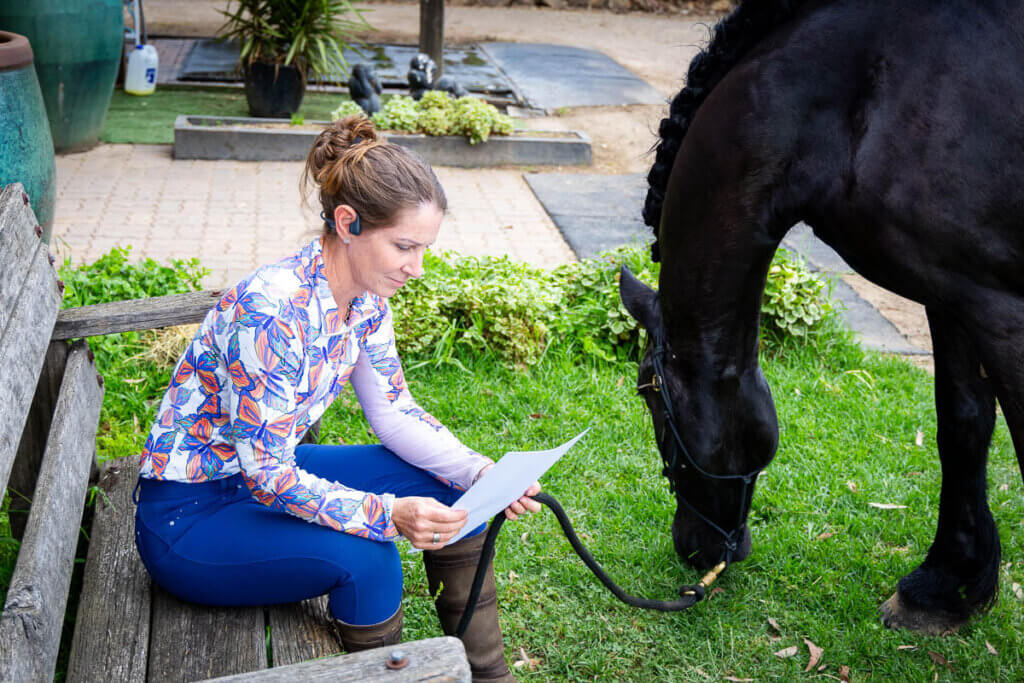
VISUALISATION: This is an old favourite. It is a mental rehearsal of the task before you do it for real. If it’s good enough for Olympic gold medalists Lindsey Vonn and Isabell Werth, it’s probably good enough for you. The key is to be specific and very detailed. Find a quiet place, relax and see yourself in the environment that you’ll find yourself in on the day of the competition and run the test or course through your mind at the pace you will do it in real life. Make it as detailed as possible and include all your senses; what can you see from your vantage point? What can you smell? How does your body feel? What are the noises around you? The horse’s hoofbeats, announcements. Make it as real as possible. The brain doesn’t know the difference between real and imagined. Make the rehearsal as positive and accurate as possible. This builds concentration and confidence. It’s like doing a practice round before the real thing. As the quote goes, “Whether you think you can or think you can’t, you’re right”.
HEIDI: The thing about visualisation is that you really need to know your horse. What horse are you on that day? Feel that horse, imagine the horse switched on to you, soft in the hand. Knowing the environment you know how your horse will be. For example, if it’s going to be a hot day, you need to visualise a hot day warm up and on a windy day you might have to deal with more tension. Different horses feel different and a horse feels different in different environments. At SIEC for States, I had to sacrifice my warmup because it was too hot. Visualisation was very helpful then because I went into the test with the feeling of the warmup.
However I have found visualisation can be counter productive when it makes you feel too relaxed. And that’s knowing yourself as well. As your relationship progresses with your horse, how you visualise may need to change too. Where your horse used to be tense and you had to visualise and relaxed test, when they start to trust you and relax you may have to visualise a more uplifted experience.
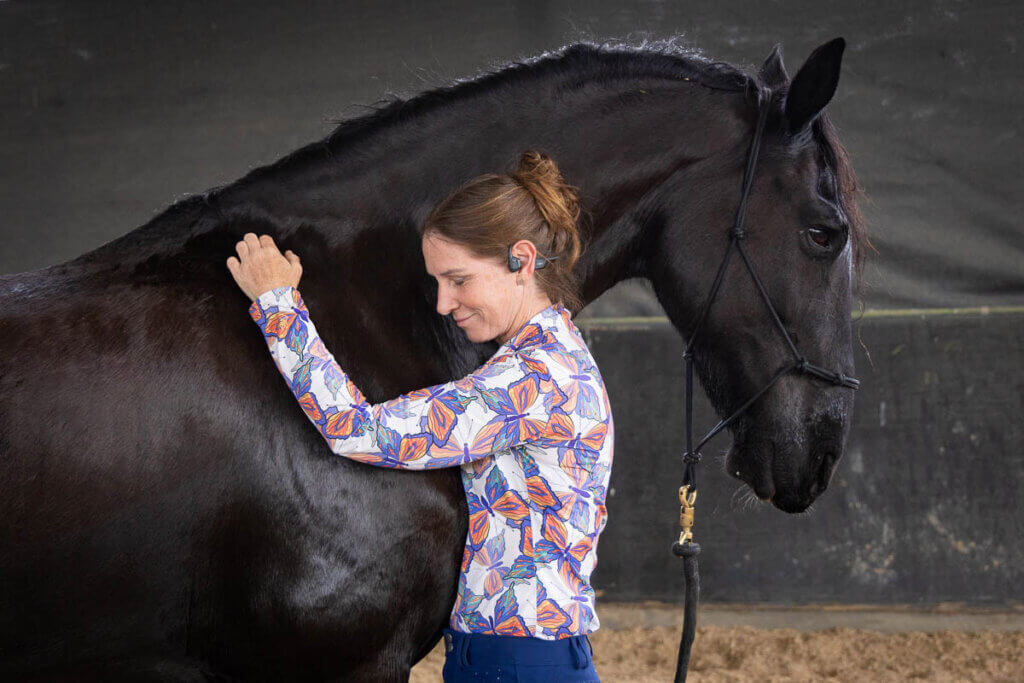
MUSIC: Some people need motivating tunes, others need relaxation. I’ve even heard of “Baby Shark” being a good focuser. Some people just need an ear worm to be in the back of their mind to take away any negative “noise”. It can also bring awareness to your horse’s rhythm and your own breathing patterns which can bring you into a relaxed, focused state. Some people like one song over and over and some prefer a playlist. Experiment what music works for you and puts you in your optimal best mental state.
HEIDI: As a para I can have a caller. My brain can get overloaded and I can’t remember my test. When you compete there is so much to be on top of, you have to remember to eat, stay hydrated, all the details for not only you but also your horse. If the brain feels overwhelmed it will prioritise what it needs to remember and the test can unconsciously turn out to be the least important thing to focus on. However I can remember my freestyle because it’s to music and therefore it is in a very different part of the brain. I find that really interesting.
Ear buds can be be helpful to let people know that you are in the zone and focused on the job at hand rather than up for a chat. I love chatting and helping people but there’s a time to focus on the test ahead.
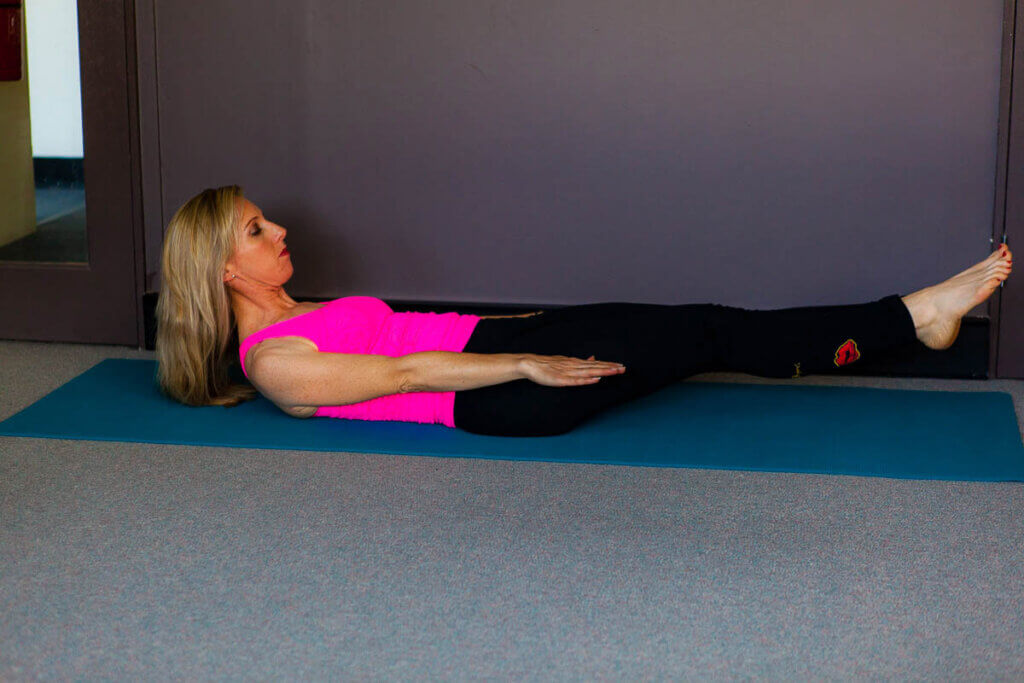
BREATHING TECHNIQUES: This can be a great way to focus the mind and also inform the body that everything is ok. One of the most popular techniques is box breathing. Here you breathe in for four counts, hold for four, breathe out for four and hold for four. The counts may vary a little…you may increase them or increase the counts for the exhale. This is something you can experiment with to find the right “box” for you.
HEIDI: I find it definitely helps with your breathing when you hum and helps bring online your parasympathetic system. It relaxes everything. Rik is quite noise sensitive. If I’m humming, he calms down and relaxes.
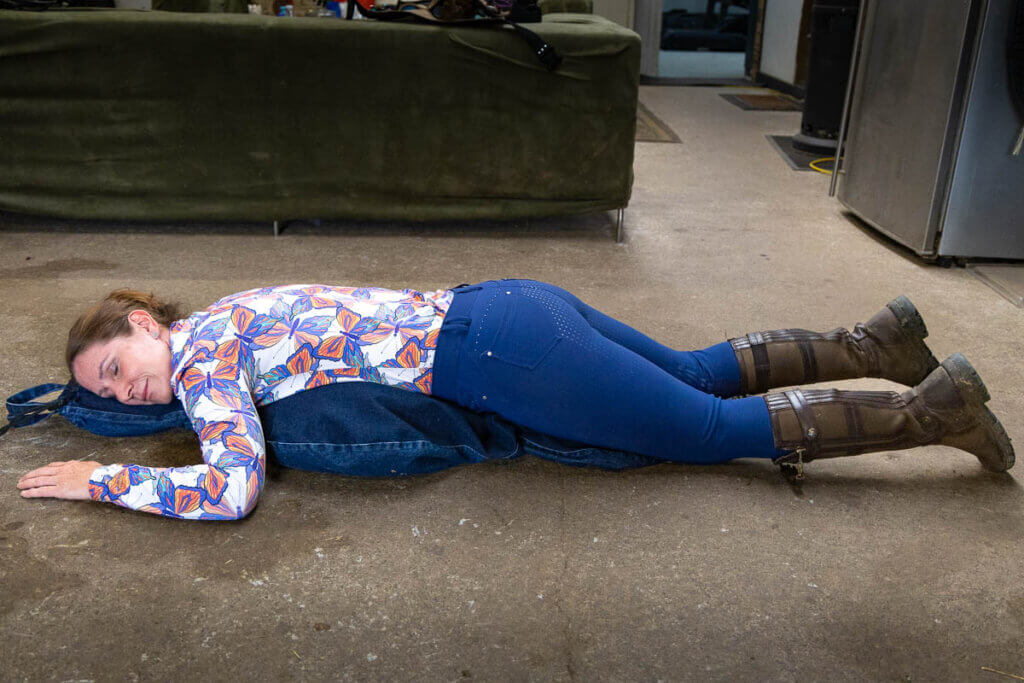
SOMA BAG: This is a device invented by chiropractor Dr Nicolas Dawe. It’s a beautiful way to calm the brain stem, reset the nervous system, activate the body and map it for the brain. Often the more you tell yourself to be calm the more anxious you can get. This takes words and thoughts of right and wrong out of the equation and lets the body unconsciously do what it needs to do. How does it work? The soupy feeling from the air filled balls in the bag create the perfect safe and supported environment that the body can recognise unconsciously as somewhere it can let go of mental and physical rigidity patterns and form, fall and reform safely. This aids good body organisation without defensive rigidity strategies which brings ease of movement and a relaxed sharpness to the mind. This in turn allows for unconscious, unforced organic breathing patterns and a Zen like feeling which is what you want to perform at your best. You can also combine just lying on the bag with your pre comp visualisation practice.
HEIDI: The Soma Bag is very relaxing. It felt amazing! That would be good at a show because I don’t have grooms or a coach so doing everything yourself can build a lot of residual tension physically and mentally. You don’t even realise it. Having coping strategies for that is so helpful.
I use Infrared on my back to relax all my muscles. All these things are important for good sleep which is key. I’m conscious of Rikaart’s sleep too. He doesn’t sleep well at comps so he actually gets hotter during the comp. I have to be aware of that and find ways to help him as well .
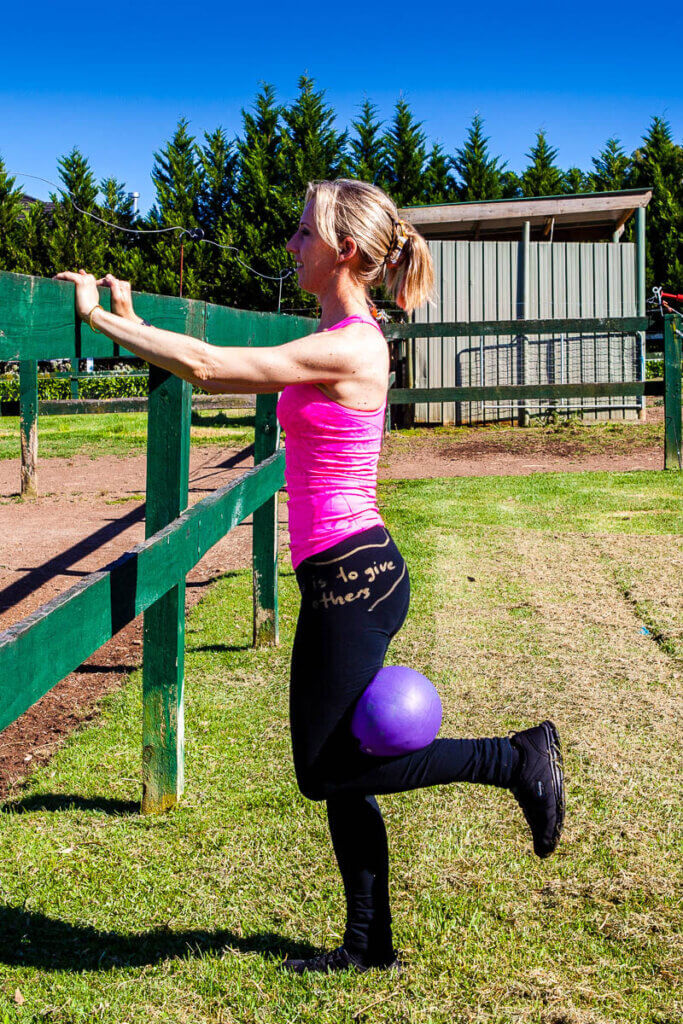
BODY FOCUS: You can use small, active movements off the horse to calmly prepare the mind and body for the task at hand. That could be a simple shoulder bridge to open the front of the hips and body and counter the “fight, flight or freeze” posture that the body may adapt under the stress of competition. Or you might like The Hundred, a Pilates exercise of abdominal engagement, breath work and balance that is part of the classical pilates warmup routine. This focus on self and how your own body is feeling can help you tune out outside distractions, the things you can’t control. Often the body needs neural activation not relaxation. Adelinde Cornellisen used to do the”Power Pose”, standing tall and stretching the arms straight up to the sky to help bring the best energy into her body.
HEIDI: During my year of rehab, no matter how fit I thought I was I couldn’t emulate rider fitness in the saddle. It took me months to get my rider fitness back. I get a lot of adhesions so I like to do movements when I get on the horse such as stretching down to the opposite stirrup with my hand and rotational movements. I can’t do a lot of stretches before I get in the saddle. I can’t release my fascia too much because that’s what’s giving me my stability. If I have a massage or something like that my muscles and fascia switch off. They need to work to compensate for other areas.
Positive Self Talk: Saying things to yourself such as, “I have all the solutions”, “I have control of the controllables”, “My horse is the absolute best”, and “We’ve got this” can all help compose your mind and alter your posture. Experiment and you might find your body relaxing and feeling like it’s taking up more space, becoming wider and more open when you start encouraging yourself with positive talk. While constructive criticism is important, straight before a competition is possibly not the best time for it. You might find a “mantra” that works for you as well. If you are a dressage rider, it might be as simple as repeating the word “rhythm” to yourself over and over. And ask yourself, is it even nerves? Or is what you are feeling excitement? This change in perspective can really alter how you feel about a situation.
HEIDI: I think positive self talk is the cornerstone of it all. When I first started competing I had massive impostor syndrome. But now I’m excited, I look forward to it. You might have to fake it until you make it, but I really feel that now. You just have to keep saying it to yourself and your body and brain start to believe it.
But actually, when you go down that centreline, everyone is equal. You put in the time and effort and all you have in that moment is the relationship with your house. Hard work beats talent when talent doesn’t put in the hard work. It is a skill I have developed consciously over a number of years. Life happens for you not to you. You can’t change what happens to you, but you can change how you react to it.
There was a situation that cost me a championship but it was a great leaning event. A caller came late and started calling the wrong thing and I had to stop. But it was a moment of enlightenment for me because Rik and I didn’t loose it. I just thought positively, “That’s behind me, let’s just crack on.”. You don’t know you have it until it’s tested. The positive I took out of it was that I know that is something that will never phase me. Whatever happens in the arena, I can just move on. That movement is finished, I have to focus on the next one. You don’t have that one disaster mean everything is all over. That’s a positive mental outlook.
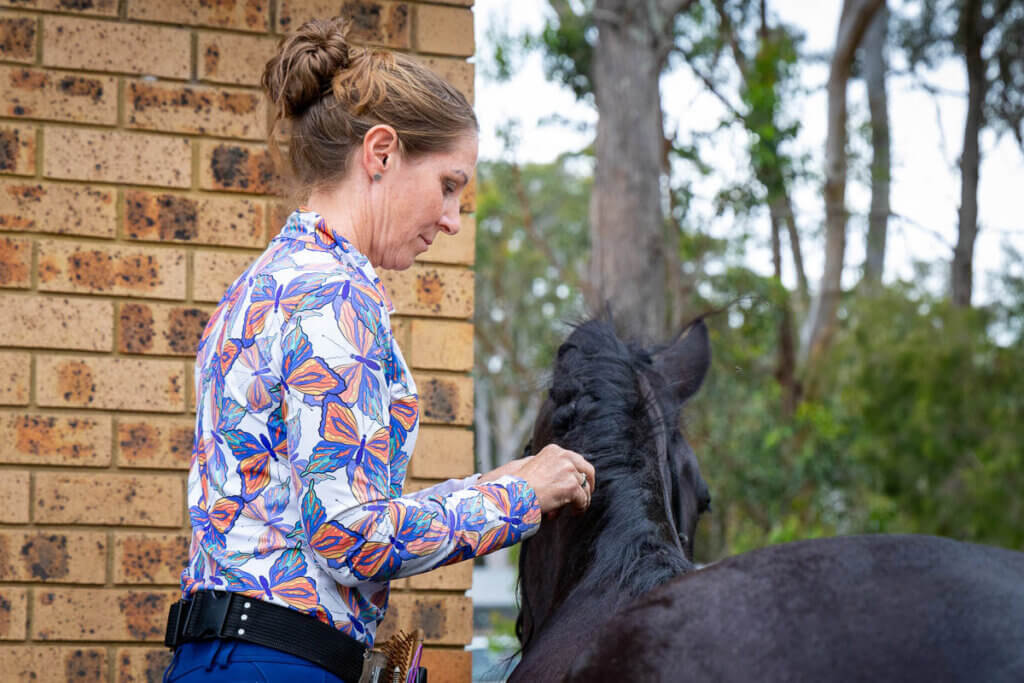
ROUTINES WITH YOUR HORSE: Be dedicated to your routines. This means leading up to the show as well as show day. On the day of the comp, you may have the routine of plaiting your horse which can help calm and focus you, giving your horse a little massage or grazing him. You can create a little bubble around the two of you, take that into the busy warmup arena and stay focused on just that instead of everyone around you in the warmup. The familiarity of knowing what you are going to do and when can take the stress out of the day and give you mental freedom. The more familiar the experience, the more relaxed you will be with it. You want to ride in a competition like you do at home so this routine can be practiced and put down pat at home well before the big day.
HEIDI: I think routines are great but I also think you have to come out of your routines too. If something happens and your routine gets mucked up, you can get discombobulated. It can take the stress out of things but the more things go wrong, it raises your tolerance levels so you cope better. I don’t get phased by anything these days.
Start with one technique at a time and see which ones suit you and your horse best. Remember, competence builds confidence. Do the training at home and trust yourself and your horse. Winter Olympic gold medalist Eileen Gu said, “I train like I’ve never won and I compete like I’ve never lost.” You too can do that with a few tried and tested techniques behind you. And remember why you started doing this to begin with, never lose the joy of it and hold your experiences lightly as you go.
Heidi has “Cape Diem” tattooed on her arm. She lives by that. “You don’t say it, you embody it. Being grateful for everything. The attitude of gratitude. I want to model to my kids the little person can do it too. Stubbornness, tenacity and determination can take you a long way.”